
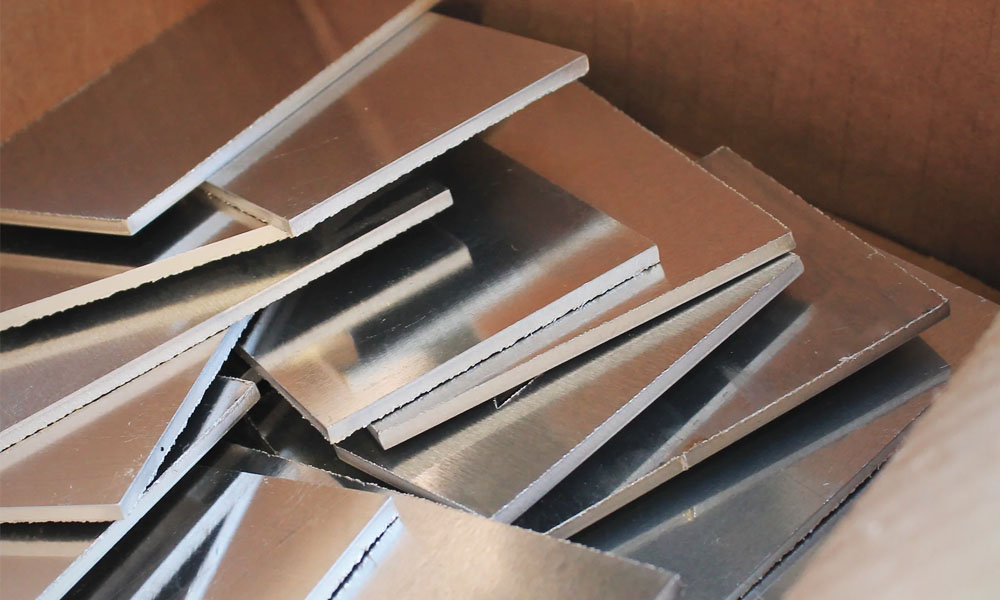
In many shops, scrap isn’t caused by bad programming or poor machines – it’s the result of small setup issues that snowball once production starts.
A program can be proven out. A machine can be calibrated. But if the physical setup isn’t solid, even the best technology can’t compensate. Small inconsistencies at the beginning of a job tend to multiply as the run continues, turning what looked like a stable process into a scrap-producing one.
The frustrating part? Most setup-related scrap is preventable. By tightening up a few fundamentals around workholding, alignment, fixturing, and measurement, shops can catch problems early and avoid costly rework, schedule delays, and wasted material.
Here are some of the most common setup mistakes to watch for – and how to fix them.
1. Inadequate or Inconsistent Workholding
If a part isn’t held securely and consistently, everything else becomes a gamble.
Cutting forces, vibration, and tool pressure all act on the part during machining. If the workholding system can’t resist those forces – or does so inconsistently – dimensional variation is almost guaranteed.
Common workholding problems include:
- Insufficient clamping force
- Uneven clamping that distorts the part
- Chips or debris between the part and fixture
- Relying on worn jaws or soft jaws that haven’t been re-cut
Another common issue is overclamping thin-walled or delicate parts, which can deform the material during machining and then “spring back” after release – leaving dimensions out of spec.
Even slight movement during cutting can throw off dimensions, positional accuracy, and surface finish – especially on tighter-tolerance work.
Quick fix: Clean all contact surfaces before setup and verify clamping pressure. Standardize jaw prep and replacement intervals. If a part “feels” secure but isn’t repeatable from cycle to cycle, the workholding needs attention.
2. Poor Part Alignment at Setup
A small alignment error at setup often turns into a big dimensional problem at the end of the run.
When parts aren’t properly aligned to machine datums, every feature machined afterward inherits that error. What starts as a few thousandths off can quickly exceed tolerance once multiple operations stack on top of each other.
Alignment mistakes typically show up when:
- Parts aren’t seated flat against datums
- Indicating is rushed or skipped
- Fixtures are installed slightly out of square
- Setup relies on visual alignment instead of measurement
This is especially risky on multi-op parts, 4th/5th-axis work, or tight positional tolerances where angular misalignment compounds across features.
Once the first part is off, every part after it is likely headed the same way – until someone stops the job.
Quick fix: Take the extra minute to indicate critical surfaces and verify alignment – especially on first articles and repeat jobs. Document proven alignment points so repeat setups are faster and more reliable.
3. Fixtures That Have Drifted Over Time
Fixtures wear out just like tools, but they’re often overlooked.
Because fixtures aren’t cutting tools, they rarely get the same inspection attention – even though they directly control part location and stability.
Over time, fixtures can:
- Lose squareness
- Develop wear points
- Accumulate small inaccuracies from repeated use
- Get “modified” without documentation
Stack enough small deviations together, and the fixture itself becomes a source of variation.
It’s not uncommon for shops to chase tolerances in programming or tooling when the real issue is a fixture that’s no longer dimensionally reliable.
A fixture that worked perfectly years ago may no longer be trustworthy – especially on high-volume or long-running jobs.
Quick fix: Periodically inspect fixtures for wear, flatness, and alignment. Validate critical dimensions against original prints. If a fixture has been altered, update documentation or consider reworking or replacing it.
4. Incorrect or Inconsistent Zeroing
Zeroing mistakes are one of the fastest ways to create scrap – especially when setups are rushed or handed off between operators.
Offsets are the bridge between the physical setup and the digital program. If that bridge is wrong, nothing downstream will be right.
Common zeroing issues include:
- Using the wrong reference surface
- Forgetting to update offsets after a tool change
- Mixing machine and work offsets
- Reusing old offsets without verification
Even experienced operators can make offset errors when multitasking, running multiple machines, or working under time pressure.
One incorrect offset can ruin an entire batch in minutes – particularly in unattended or lights-out machining.
Quick fix: Verify all critical offsets during setup and after any change. Use setup checklists and offset sign-off procedures to ensure consistency across shifts and operators.
5. Measurement Errors During Setup and First Article
Measurement problems don’t always mean bad tools – they often mean poor technique, wrong reference points, or rushed validation.
Inspection during setup is the gatekeeper of production quality. If errors slip through here, they’ll repeat at scale.
Mistakes often come from:
- Measuring from the wrong datum
- Using the wrong measuring tool for the tolerance
- Failing to account for temperature or part deflection
- Rushing first-article inspections
For example, checking a ±0.0005″ tolerance with calipers instead of a micrometer – or measuring a warm part fresh off the machine – can produce misleading results.
If the first part isn’t truly verified, everything after it is at risk.
Quick fix: Slow down for first-article inspection. Confirm dimensions against the correct datums using appropriate measuring tools, and re-check critical features after the part stabilizes thermally.
Turning Setup into a Competitive Advantage
Setup is where quality is either locked in – or compromised.
Shops that consistently reduce scrap don’t just focus on machining strategy – they treat setup as a precision process in its own right.
They often emphasize:
- Standardized setup procedures
- Clear documentation and setup sheets
- Regular fixture inspections
- Training operators to catch issues early
Many also implement photos, digital setup records, and verification checklists so repeat jobs start from a proven baseline instead of guesswork.
A few extra minutes spent getting the setup right can save hours of rework, reduce material waste, protect margins, and improve confidence on the shop floor.
When scrap keeps showing up, it’s often worth asking:
Is the setup really as solid as we think it is?