
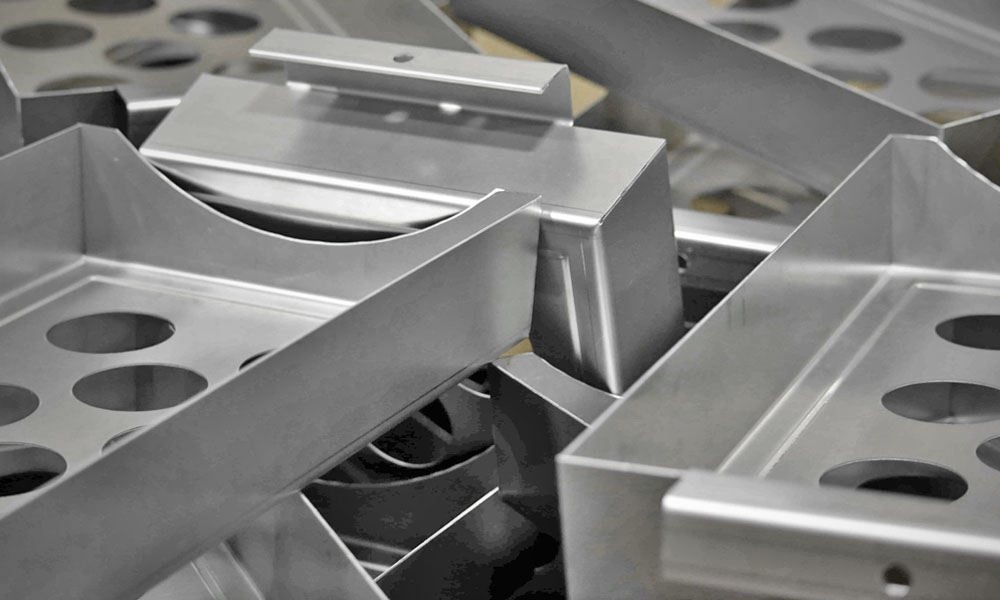
Metal stamping is one of the most common ways to turn flat metal into useful parts.
If you drive a car, use a phone, cook with an appliance, or plug something into a wall, you have used products that likely contain stamped metal parts. These parts may be small, like an electrical contact, or large, like an automotive bracket or panel.
At its core, metal stamping uses force, tooling, and a press to cut or shape sheet metal into a specific part. It is fast, repeatable, and cost-effective when a company needs to make the same part many times.
What Is Metal Stamping?
Metal stamping is a manufacturing process that forms flat metal sheets or metal coils into finished parts.
The process uses a stamping press, a die, and a punch. The die holds the shape of the part. The punch applies force to the metal. When the press moves, the metal is cut, bent, drawn, or formed into the needed shape.
Most stamping is done cold, which means the metal is shaped at room temperature. Some applications use hot stamping, especially when working with high-strength materials that need heat to form correctly.
Metal stamping can make simple parts, such as washers and clips, or more complex parts with bends, holes, ribs, flanges, and deep shapes.
How the Metal Stamping Process Works
The exact steps depend on the part, material, and production volume. But most stamping jobs follow a similar path.
1. Part Design
The process starts with the part design.
Engineers look at the part’s shape, size, material, bend locations, holes, tolerances, and end use. This step matters because a part that looks simple on paper may be hard to stamp if the bends are too sharp, the holes are too close to an edge, or the metal is likely to crack.
Good design helps reduce scrap, tool wear, and production problems.
2. Material Selection
Next, the manufacturer selects the metal.
Common stamping materials include:
- Carbon steel
- Stainless steel
- Aluminum
- Copper
- Brass
- Nickel alloys
- High-strength steel
Each material behaves differently. Aluminum is light and corrosion-resistant. Stainless steel is strong and resists rust, but it can be harder on tools. Copper and brass are often used for electrical parts because they conduct electricity well.
The material must be strong enough for the final part but formable enough to survive the stamping process.
3. Tool and Die Creation
The die is the custom tool that shapes or cuts the metal.
Dies are usually made from hardened tool steel or carbide because they must handle repeated force. A die may be simple, with one operation, or complex, with several stations that perform different steps as the metal moves through the press.
Tooling is one of the biggest upfront costs in metal stamping. But once the die is built and tested, it can produce large numbers of parts at a low cost per piece.
4. Feeding the Metal
The metal is fed into the press as a flat sheet, blank, or coil.
High-volume stamping often uses coil-fed systems. The coil unwinds and feeds into the press automatically. This helps the press run quickly and consistently.
5. Cutting, Forming, or Drawing
The press applies force to the metal through the punch and die.
Depending on the job, the press may cut the metal, bend it, punch holes, form raised features, or draw it into a deeper shape. Many stamped parts require more than one operation.
6. Finishing and Inspection
After stamping, parts may need extra steps.
These can include:
- Deburring sharp edges
- Washing or cleaning
- Heat treating
- Plating
- Powder coating
- Anodizing
- Assembly
- Quality inspection
Inspection checks that the part meets the required size, shape, and performance standards.
Common Metal Stamping Operations
Metal stamping is not one single action. It is a group of processes that can be used alone or together.
Blanking
Blanking cuts a flat piece of metal from a larger sheet or coil. The cut-out piece becomes the workpiece for later forming.
For example, a round blank may be cut first before it is drawn into a cup shape.
Piercing
Piercing punches holes, slots, or openings into the metal.
The removed piece is scrap, while the remaining part continues through the process.
Bending
Bending changes the angle of the metal.
This is used to create tabs, brackets, clips, channels, and flanges. The bend radius must be designed correctly so the metal does not crack.
Forming
Forming changes the shape of the metal without removing much material.
This can include curves, ribs, offsets, or other features that add strength or help the part fit into an assembly.
Drawing and Deep Drawing
Drawing pulls metal into a die cavity to create a three-dimensional shape.
Deep drawing is used when the part has more depth, such as a cup, can, enclosure, housing, or shell. It takes careful control because the metal has to flow without tearing or wrinkling.
Coining
Coining uses high pressure to create very precise details, edges, or surface features. It can also help flatten burrs or improve part accuracy.
Embossing
Embossing creates raised or recessed designs in the metal. This may be used for logos, stiffening ribs, labels, or grip patterns.
Main Types of Metal Stamping
Different stamping methods are used based on part size, shape, volume, and complexity.
Progressive Die Stamping
Progressive die stamping is used for high-volume production.
A metal strip moves through several stations inside one die. Each station performs a different operation, such as piercing, bending, forming, or cutting. By the time the strip reaches the last station, the finished part is cut free.
This method is fast, consistent, and efficient for parts that require several steps.
Transfer Die Stamping
Transfer stamping moves the part from one station to another after it is separated from the strip.
This is useful for larger or deeper parts that need more room to move between operations.
Compound Die Stamping
Compound die stamping performs more than one cutting operation in a single press stroke.
It is often used for flat parts that need strong feature-to-feature accuracy, such as washers, shims, or flat electrical components.
Deep Draw Stamping
Deep draw stamping forms flat metal into deeper, hollow shapes.
It is common in housings, cans, sleeves, enclosures, and certain automotive or appliance parts.
Four-Slide or Multi-Slide Stamping
Four-slide stamping uses tools that move from multiple directions.
This is often used for small, detailed parts with complex bends, such as clips, springs, connectors, and electronic components.
Benefits of Metal Stamping
Metal stamping is popular because it solves several manufacturing problems at once.
High Production Speed
Once the tooling is ready, stamping presses can make parts very quickly.
This makes stamping a strong fit for high-volume production, especially when thousands or millions of the same part are needed.
Repeatable Quality
Stamping is built for consistency.
A well-designed die can produce the same shape again and again with tight control. This is important for parts that must fit into larger assemblies.
Low Cost Per Part at Scale
Tooling can be expensive at the start.
But after the tooling is built, each part can be produced at a much lower cost than many machining or fabrication methods. The higher the volume, the more the tooling cost is spread across each part.
Material Efficiency
Stamping can be designed to reduce wasted metal.
In progressive die stamping, parts can often be nested closely in the strip to make better use of the material.
Strong, Lightweight Parts
Stamped parts can be thin and light while still being strong.
Bends, ribs, and formed features can add strength without adding much weight. This is one reason stamping is common in automotive, aerospace, electronics, and appliance manufacturing.
Complex Shapes in Fewer Steps
Stamping can combine cutting, bending, forming, and piercing in one production process.
That can reduce the need for welding, machining, or extra assembly.
Common Applications of Metal Stamping
Metal stamping is used across many industries because it can make accurate parts at high volume.
Automotive
Automotive manufacturers use stamped metal parts throughout vehicles.
Common examples include:
- Brackets
- Clips
- Panels
- Seat components
- Battery parts
- Heat shields
- Structural reinforcements
- Electrical connectors
Stamping supports the automotive industry because it can produce strong, repeatable parts at scale.
Electronics
Electronics often need small, precise metal parts.
Stamped parts are used in:
- Connectors
- Terminals
- Contacts
- Shields
- Clips
- Switch parts
- Battery contacts
Copper, brass, and other conductive metals are common in this space.
Appliances
Many household appliances include stamped parts.
Examples include:
- Washer and dryer parts
- Oven panels
- Refrigerator brackets
- Dishwasher components
- Housings
- Mounting plates
Stamping helps appliance makers produce durable parts with a consistent fit.
Aerospace
Aerospace applications often need lightweight, high-strength parts.
Stamped parts may be used in brackets, clips, structural supports, shields, and precision assemblies. Material choice and quality control are very important in this industry.
Medical Devices
Medical products often require small, precise parts made from clean, corrosion-resistant materials.
Stamped components can be used in surgical tools, device housings, sensors, connectors, and other medical equipment.
Industrial Equipment
Industrial machines use stamped parts for strength, fit, and repeatability.
Examples include guards, brackets, plates, terminals, covers, clamps, and machine components.
Common Metal Stamping Challenges
Metal stamping is reliable, but it has to be controlled well.
Common issues include:
Burrs
A burr is a sharp edge left after cutting or piercing. Burrs can happen when tooling wears down or clearance is not correct.
Cracking
Cracking can happen when the metal is stretched too far, bent too tightly, or formed in the wrong direction against the grain.
Wrinkling
Wrinkling can happen during drawing when the metal does not flow smoothly into the die.
Springback
Springback happens when metal tries to return toward its original shape after bending or forming. Engineers plan for this by adjusting tooling and bend angles.
Galling and Tool Wear
Galling happens when metal sticks to the tool surface under pressure and friction. Over time, this can scratch parts, damage tools, slow production, and cause rejects.
This is where proper lubrication becomes important.
Why Lubrication Matters in Metal Stamping
Metal stamping puts a lot of pressure on the material and the tooling.
As metal slides, bends, or stretches against the die, friction builds. That friction can create heat, wear, scoring, galling, and poor surface finish. It can also make the press work harder than it needs to.
A good metalworking lubricant helps by:
- Reducing friction between the metal and die
- Helping the metal flow during forming
- Reducing heat
- Protecting punches and dies from wear
- Improving surface finish
- Helping prevent galling
- Supporting more consistent part quality
Lubrication is especially important when stamping harder materials, stainless steel, high-strength steel, deep drawn parts, or parts with tight tolerances.
When Metal Stamping Is the Right Choice
Metal stamping is usually a strong fit when:
- The part will be made in high volume
- The design can be formed from sheet metal
- Repeatability is important
- Low cost per part matters
- The part needs holes, bends, tabs, ribs, or formed features
- The material is thin to medium sheet metal
It may not be the best choice for very low-volume parts, very thick parts, or parts with complex internal shapes that are better suited for machining, casting, or additive manufacturing.
Final Thoughts
Metal stamping is a proven way to make strong, accurate metal parts at scale.
The process starts with flat sheet metal and uses a press, punch, and die to cut or form the part into shape. Depending on the design, stamping can include blanking, piercing, bending, forming, drawing, coining, and embossing.
Its biggest strengths are speed, repeatability, material efficiency, and low per-part cost at higher volumes. That is why metal stamping is used in automotive, electronics, appliances, aerospace, medical devices, and industrial equipment.
Still, the process depends on control. Good design, the right material, accurate tooling, proper press setup, and the right lubricant all matter. Products like Anchorlube can help reduce friction, heat, tool wear, and galling so stamping operations run cleaner and more consistently.